Circulating Chillers and Heaters
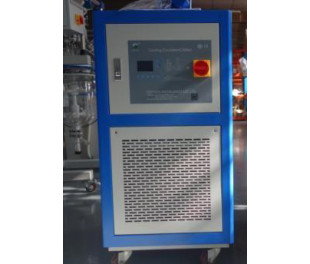
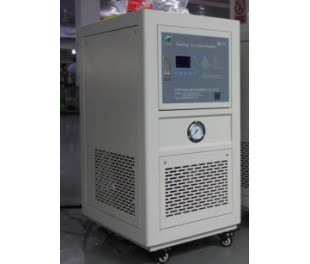
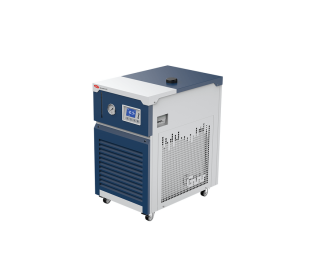
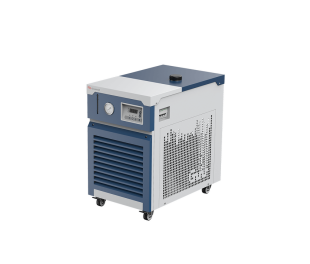
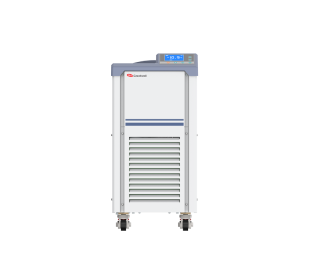
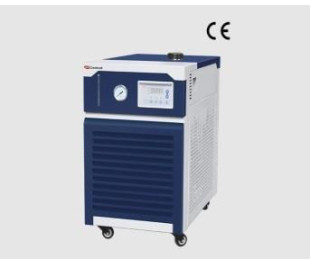
Circulating chillers and heaters maintain dynamic thermal control through forced fluid circulation via coils, jackets, and external systems. They operate with microprocessors that adjust heating power or refrigerant compression based on the instantaneous thermal demand of the process.
Dynamic Thermal Control with Circulation Equipment for Continuous Processes
These systems pump thermal fluids (water, ethylene glycol, synthetic oils) maintaining target temperature with maximum deviation of ±0.1°C to ±0.5°C depending on model. PT100 sensors or type K thermocouples located in reservoir and return line adjust heating resistors or expansion valves of the refrigerant cycle. Typical flow rates range from 8 L/min to 25 L/min with discharge pressure between 0.3 and 1.2 bar, sufficient to circulate through rotary evaporators with vertical or coiled condensers, jacketed reactors from 5 to 100 liters, and distillation trains that include Claisen adapter for simultaneous extraction.
Cooling and Heating Temperature Ranges
- Immersion coolers: -10°C to +40°C with R134a or R290 refrigerant, capacity 1.5 to 4 kW
- Recirculating cryostats: -40°C to +200°C using cascade compressor plus 2.5 kW resistors
- Circulating thermostatic baths: +20°C to +150°C with silicone oil or Galden HT, stability ±0.05°C
- Hybrid heat/cold units: -25°C to +200°C switchable via automatic solenoid valves
Cryogenic models reach -80°C using eutectic mixtures or liquid nitrogen as secondary refrigerant. Internal bath volumes vary between 6 and 30 liters, with optional external reservoirs up to 100 liters for high thermal demand applications.
Applications in Laboratory Reactors and Condensers
Connected via reinforced hoses (ID 10-19 mm) and quick couplings to pear-shaped flasks mounted on heating mantles, they enable efficient vapor condensation in Vigreux columns or bent adapter with ground joint 24/40. For fractional distillations, the 75° bent adapter directs condensate while circulating fluid maintains head temperature between 56°C and 78°C depending on boiling point of target component. Vacuum systems require cold traps operating at -20°C to -40°C to capture solvents before pumping system, protecting rotary pump oils.
Fluid Circulation Systems with Digital Precision
Touchscreen TFT displays of 5.7 inches program temperature ramps (0.1 to 10°C/min), isothermal hold times and repetitive cycles for automated synthesis. RS-232, USB and Ethernet interfaces record data every 5 seconds with 0.01°C resolution. Magnetic centrifugal pumps eliminate mechanical seals susceptible to leaks, operating continuously for 8000 hours without maintenance. Audiovisual alarms activate upon overheating, low fluid level or circulation failure.
Our partners