
Glass Vacuum Filters
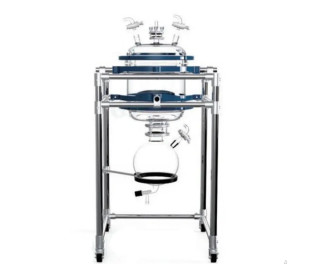
Vacuum-Assisted Filtration Using Glass Filter Assemblies
Glass vacuum filters are the workhorses of my lab bench, and I honestly can't imagine running separations without them. Borosilicate glass construction means you can throw just about any solvent at these units without worrying about degradation, and the ground glass joints create leak-proof seals that hold vacuum like a dream.
I've been using these filtration assemblies for everything from crystallization harvesting to particulate analysis, and they consistently outperform disposable alternatives. Available in capacities from 25ml to 2000ml, you can scale your filtrations based on sample volume without changing your technique.
Sintered Glass Disc Porosity Grades
- Coarse (P1): 100-160 micron pores for rapid filtration of precipitates and large crystals
- Medium (P2-P3): 40-100 micron range, my go-to for most organic synthesis workups
- Fine (P4): 10-16 microns when you need analytical-grade clarity
- Ultra-fine (P5): 4-5.5 microns for bacterial filtration and colloidal separations
Choosing the right porosity saves you hours of waiting time. I typically keep P2 and P3 grades on hand since they handle 80% of routine lab filtrations without clogging.
Buchner Funnel and Flask Combinations
Standard joint sizes like 14/20, 19/26, and 24/29 ensure compatibility across your entire glassware collection. I connect mine to rotary evaporators when I need continuous filtration during solvent recovery operations, and the setup integrates seamlessly with circulating chillers and heaters for temperature-controlled filtrations.
Pro tip: pair your vacuum filter with a Claisen adapter when you need to add wash solvents during filtration without breaking vacuum. For multi-stage separations, an Adapter Fractionation Connecting 75° with socket lets you divert filtrate streams, while an Adapter Bent 75° reduces bench space requirements in crowded fume hoods.
Solvent Compatibility and Chemical Resistance
Borosilicate glass handles concentrated acids, chlorinated solvents, and aromatic compounds without degradation. High-temperature tolerance up to 500°C means you can heat-sterilize between uses or perform hot filtrations directly. The smooth glass surfaces resist contamination buildup and clean effortlessly with piranha solution or base baths, maintaining analytical purity across hundreds of filtration cycles.
Our partners
We only work with trusted brands






Sign up to our newsletter to get the latest news and updates about our products.