
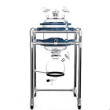
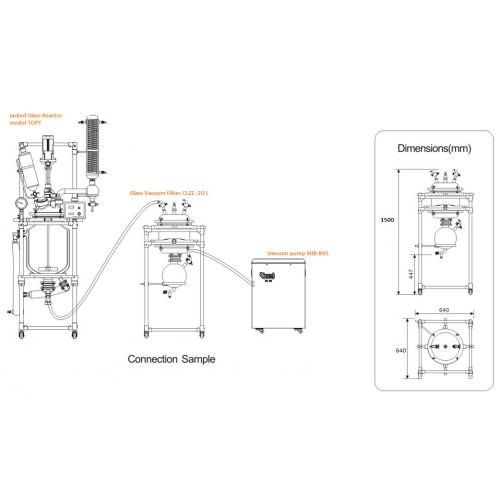
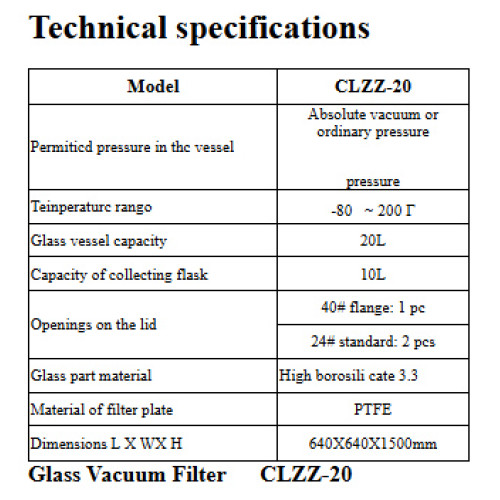
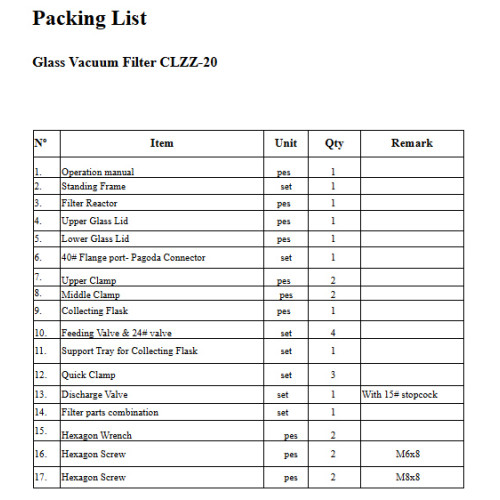


Glass Vacuum Filter CLZZ-20
Filtration capacity : 20 liters
Material : Borosilicate glass 3.3
Maximum vacuum pressure : 0.08 MPa
Temperature resistance : up to 200 ° C
Weight : 3.5 kg
Dimensions : 640 mm x 640 mm x 1500 mm
Pilot solid-liquid separation process.
Advantages
● Stainless steel support frame, beautiful appearance and strong corrosion resistance;
● High-strength borosilicate glass vessel, strong corrosion resistance and wide application range, the filtration process is visible.
● Various filter plate options.
The filter plate is convenient to remove, easy to clean and serve.
Have a question about this product?
- Link
- Price
- Availability
- Quantity
- CLZZ-20
- 4,271.00€
- 2
-
-
Glass Vacuum Filter CLZZ-20 for Laboratory Filtration
Last week I watched a colleague try to gravity-filter 15 liters of precipitate from an overnight reaction. Three hours later, he was still waiting. The CLZZ-20 would have finished that job in twenty minutes under vacuum. When you're running medium-scale synthesis batches, time spent watching drip-drip-drip filtration is time you're not spending on actual chemistry.
20-Liter Capacity Filtration for Corrosive Laboratory Solvents
The 2000ml funnel capacity lines up perfectly with typical output from Glass reactor GRL-20CE runs. You dump your reaction mixture, apply vacuum, and the filtrate pulls through while you're already prepping your next step. The jacketed design means you can run chilled solvent through the walls when filtering temperature-sensitive compounds - pair it with Heating cooling system HR-70 to maintain anywhere from -80°C to 200°C. I've used this setup for filtering Grignard reaction products that decompose above 10°C. Works like a charm when you need cold filtration without ice baths making a mess.
Borosilicate Glass Durability Under Vacuum
GG-17 borosilicate construction handles the thermal shock from pouring hot filtrate straight off a reflux condenser. I've dumped 180°C solutions directly into mine without cracking issues.
- 20cm filter diameter fits standard Buchner funnels and filter paper sizes
- Ground glass joints seal without vacuum grease contaminating your filtrate
- PTFE vacuum sealing components resist aggressive solvents
- Transparent walls let you spot breakthrough before switching collection flasks
- SUS 304 stainless steel frame stays stable during high-vacuum pulls
Thermal Stress Management Features
The jacketed design does more than temperature control. When filtering hot solutions, circulate heated fluid through the jacket to prevent thermal gradients that crack lesser glassware. Connect Heater UC-5020 for maintaining elevated temperatures during filtration of compounds that crystallize at room temperature. I learned this the hard way when filtering a product that solidified mid-process and clogged everything. Now I keep the whole assembly at 60°C until filtration completes. Scale considerations matter here - if you're working smaller batches, standard lab equipment works fine, but for volumes approaching 20 liters, you need the capacity. Larger operations should look at Glass Vacuum Filter CLZZ-30 instead.
Solvent Compatibility Specifications
Borosilicate glass and PTFE seals handle:
- Chlorinated solvents: DCM, chloroform, carbon tetrachloride without degradation
- Alcohols and ketones: methanol through butanol, acetone, MEK
- Dilute mineral acids: HCl, H2SO4, HNO3 at working concentrations
- Base solutions: sodium hydroxide, potassium carbonate washes
After filtration, transfer your filtrate directly to Rotary evaporator RE-2000A for concentration. The workflow efficiency beats separate handling steps - filter, evaporate, done. Clean immediately after use because dried residues bond permanently to glass surfaces. Base bath for organics, acid bath for inorganics, never mix the two without thorough rinsing.
Leave a review about product
Sign up to our newsletter to get the latest news and updates about our products.